
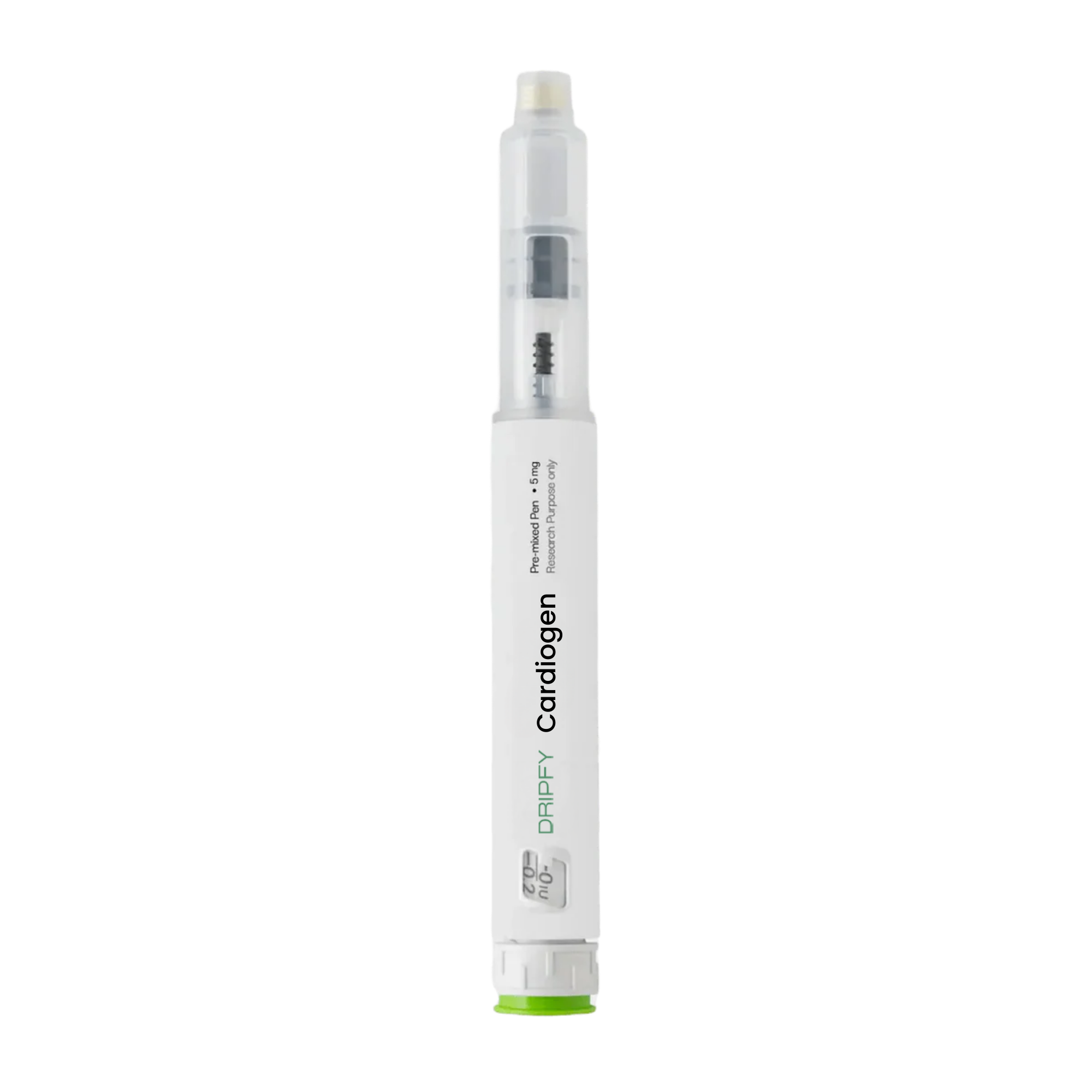
Cardiogen
Investigational cardiac-directed peptide bioregulator (Khavinson-type) · Pre-filled pen
Cardiogen is a short peptide bioregulator from the Khavinson family, proposed to act on cardiac-tissue cells by influencing protein-synthesis and gene-regulatory signalling. The studied concept is that organ-directed peptides might help maintain stable cardiac cell metabolism and tissue integrity, but the evidence is predominantly preclinical. It has not been shown to prevent or treat cardiovascular disease in humans.
Studied use areas
- Cardiac-tissue maintenance signalling (research interest)
- Protein-synthesis regulation in heart cells
- Cardiac cell metabolism stability (investigational)
- Age-related cardiovascular resilience (exploratory framework)
Safety & status
- Investigational bioregulator with no established human cardiovascular safety data; physician supervision required
- Not approved as a medicine by EMA or MHRA
- Cardiac symptoms are potentially serious and need urgent medical assessment, not peptide self-management
⚕ Clinical note: This is educational information only and not medical advice. Cardiogen is investigational; any use should be individualised and determined by a treating physician under appropriate supervision.
Evidence: Grade D — investigational; predominantly preclinical data, with no robust human clinical trials. · References: Peer-reviewed peptide-bioregulator (Khavinson) research literature; General cardiovascular physiology reviews; EMA/MHRA guidance on unlicensed investigational substances