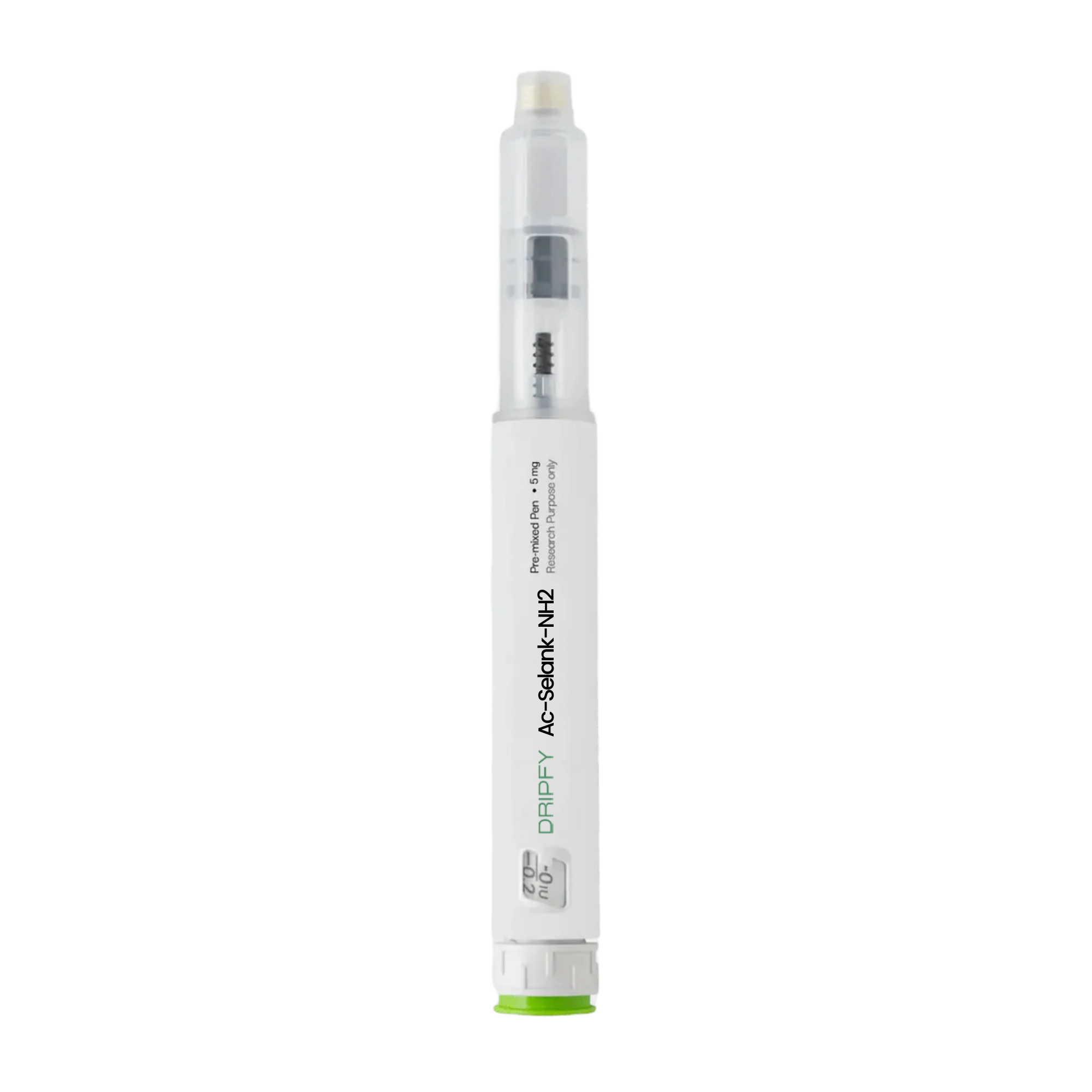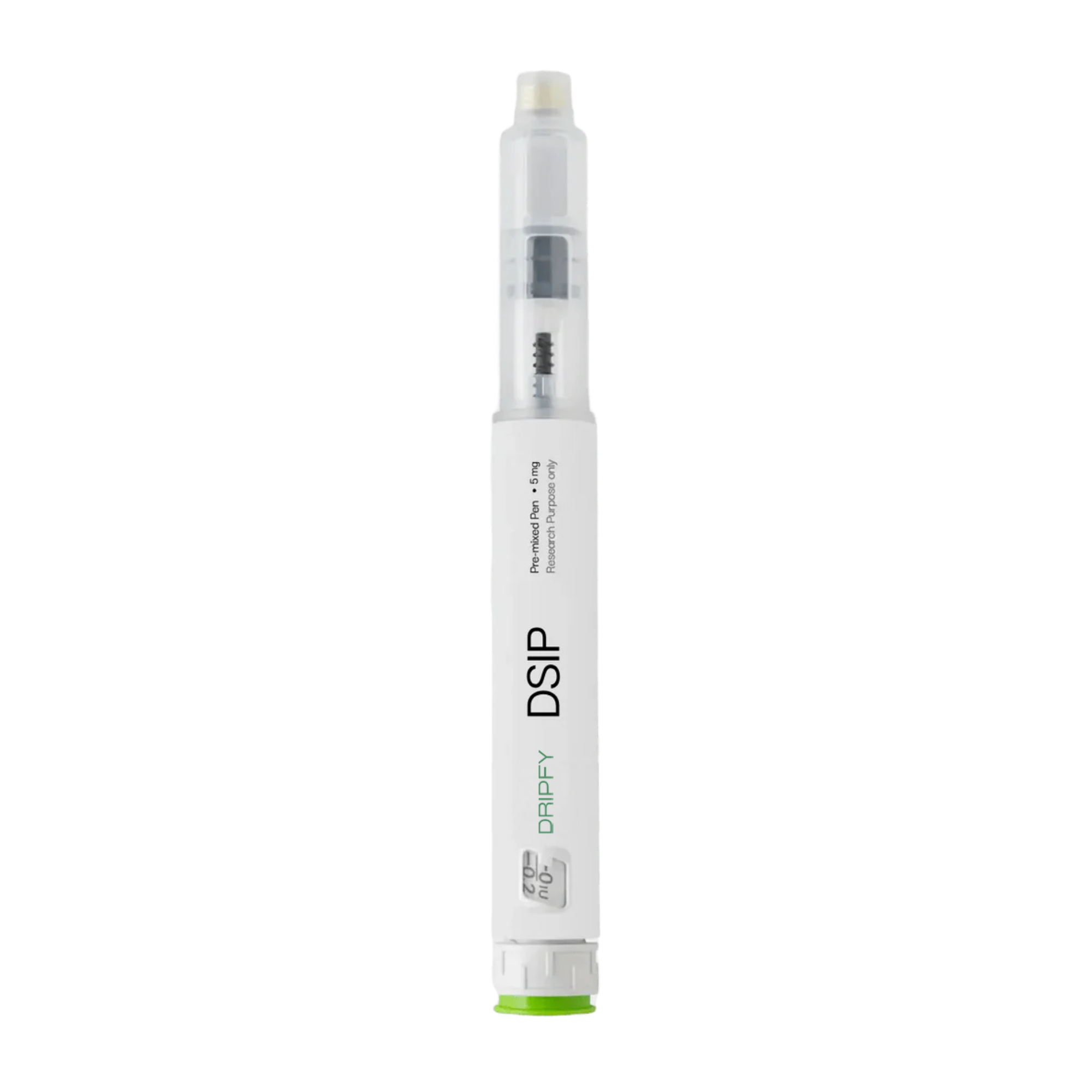

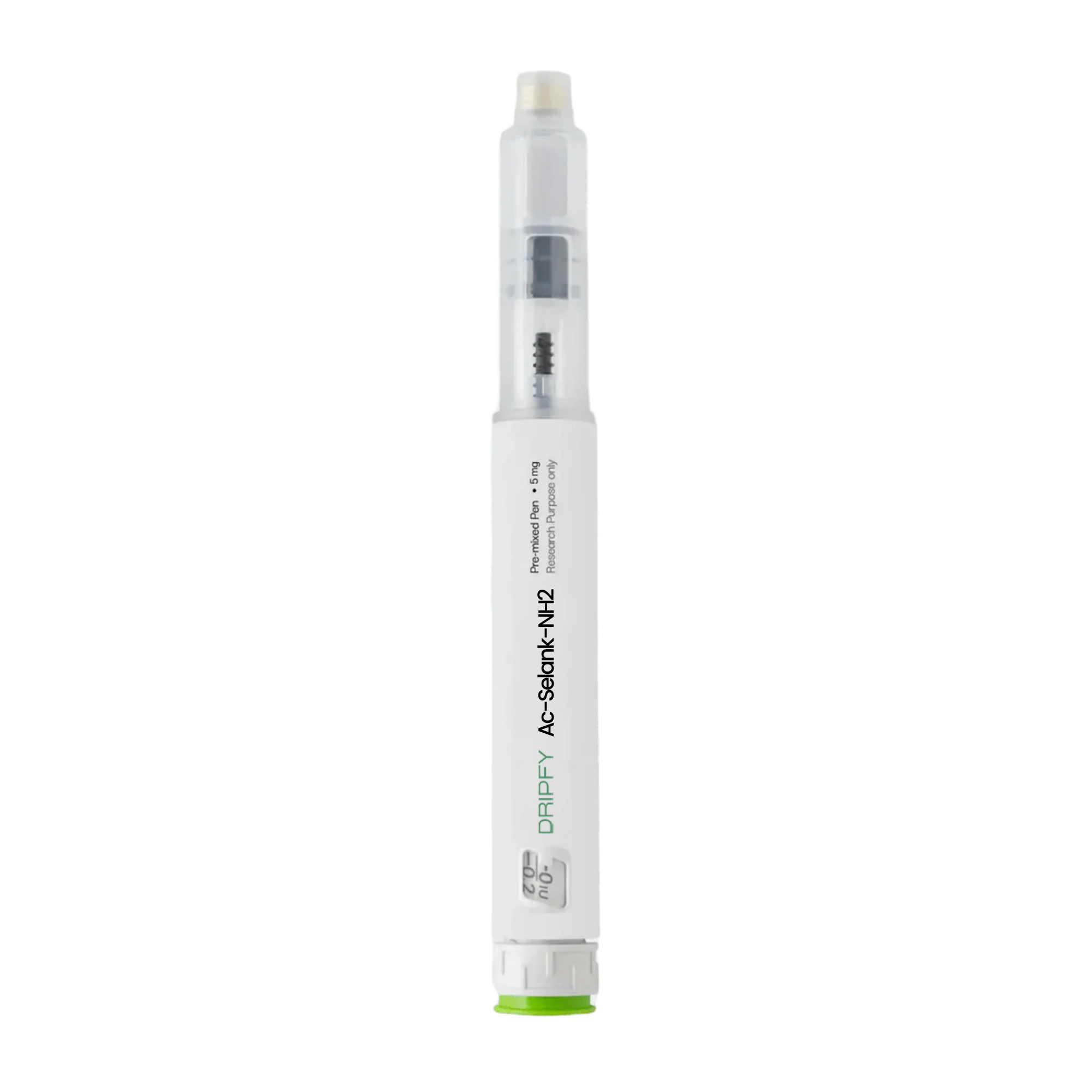
AC-Selank + Delta Sleep (Blend)
Investigational anxiolytic/sleep peptide blend (Selank + DSIP) · Pre-filled pen
This blend combines two investigational neuropeptides. Selank is a synthetic heptapeptide derived from the immunopeptide tuftsin, studied for anxiolytic effects and for modulation of GABAergic and monoaminergic signalling as well as BDNF and enkephalin pathways. DSIP is a nonapeptide first isolated in association with slow-wave sleep and investigated for its influence on sleep architecture and stress-hormone regulation, though its endogenous role remains incompletely defined. Combining the two is intended to overlay calm- and sleep-related signalling, but the interaction has not been characterised in controlled human studies.
Studied use areas
- Investigated for stress-response and anxiety-related signalling (Selank component)
- Studied for influence on sleep onset and sleep architecture (DSIP component)
- Explored in early research for cortisol-axis / stress-hormone signalling
- Positioned for physician-directed research combining calm and sleep pathways
Safety & status
- Investigational blend; neither component is EU/UK-approved and combined human safety and efficacy data are very limited
- Combining two compounds compounds the uncertainty — interactions and additive effects are poorly characterised, so physician supervision is mandatory
- Not for use in pregnancy or breastfeeding, or alongside sedatives or CNS depressants without physician oversight
⚕ Clinical note: This is educational information, not medical advice. This Selank + DSIP blend is investigational and unapproved in the EU/UK, and combining compounds increases the uncertainty; it is intended for physician-directed use only and is not a treatment for anxiety, insomnia, or any condition.
Evidence: Grade D — investigational; limited human data, mainly preclinical · References: Zozulya AA et al., Bulletin of Experimental Biology and Medicine, 2001; Graf MV, Kastin AJ, Neuroscience & Biobehavioral Reviews, 1984; Kozlovskaya MM et al., Neuroscience and Behavioral Physiology, 2003