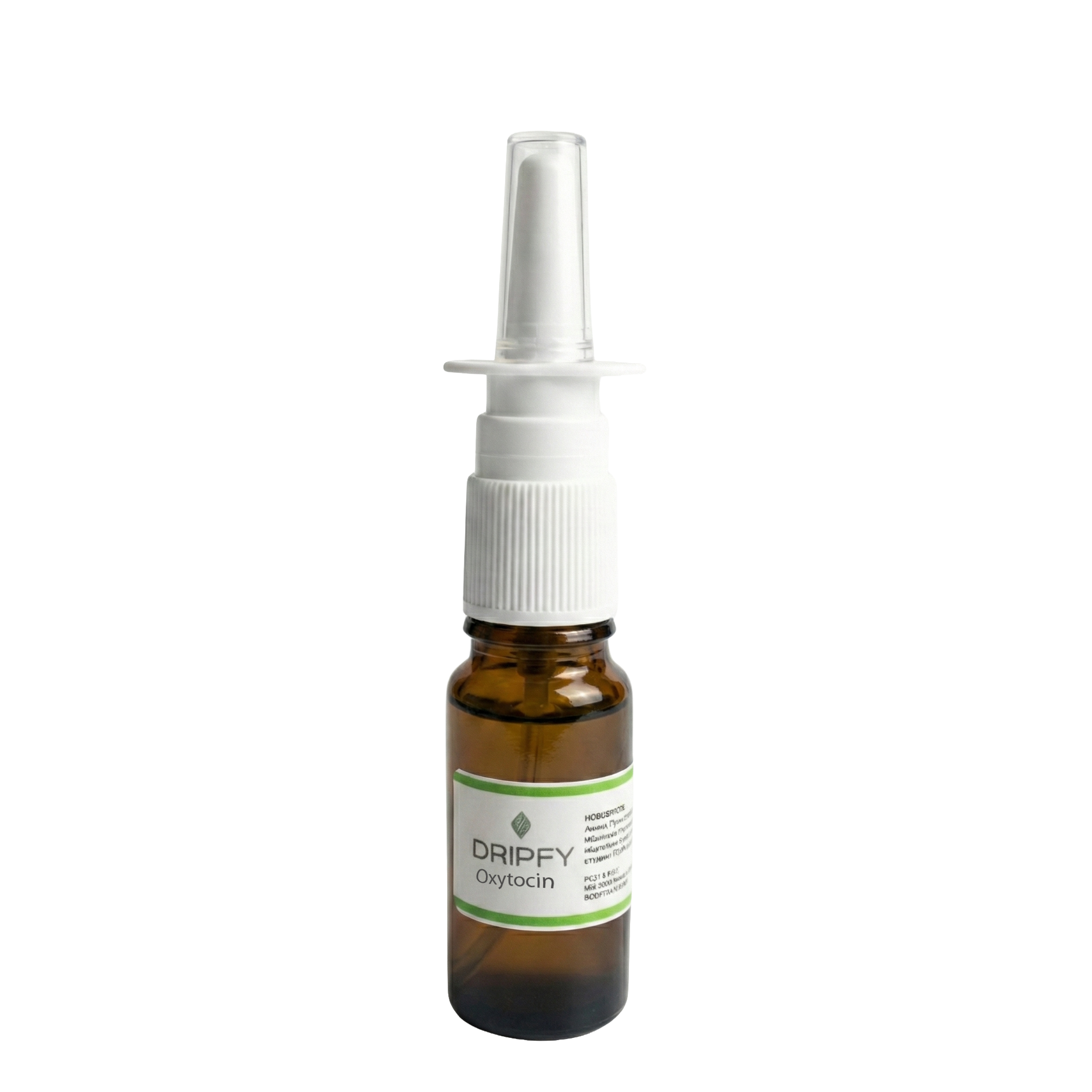

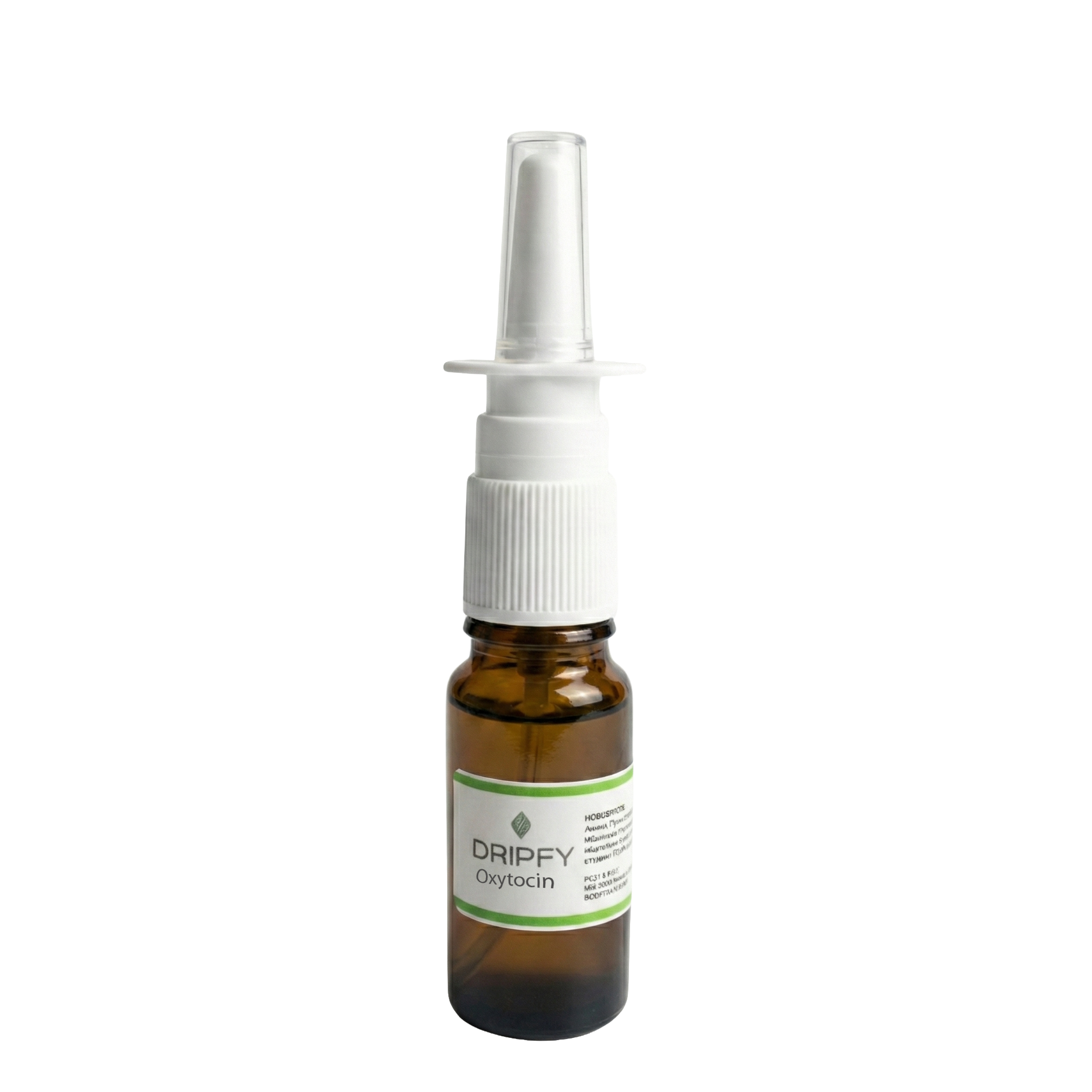
Oxytocin + PT-141 (Nasal Spray)
Oxytocin + melanocortin agonist (PT-141) intranasal blend (investigational) · Intranasal spray
PT-141 (bremelanotide) is a melanocortin-receptor agonist thought to act centrally at MC4R to influence sexual-arousal pathways. A subcutaneous injectable form of bremelanotide (Vyleesi) is approved in the United States only (it has no UK or EU marketing authorisation), and that approval does not extend to this intranasal blend. Oxytocin is a neuropeptide investigated for roles in bonding and arousal-related central signalling, though its evidence in this context is mixed. As an intranasal blend the combination is investigational, and the delivery route and pairing have not been established in robust trials, and it makes no claim to treat sexual dysfunction.
Studied use areas
- Investigated for sexual desire and arousal (central pathways)
- Studied for melanocortin-mediated arousal signalling
- Explored for oxytocin's bonding- and arousal-related effects
- Positioned for research on central (non-vascular) arousal mechanisms
Safety & status
- Investigational blend; intranasal bremelanotide was studied in early clinical trials, but its development was halted after FDA concerns over blood-pressure increases (the approved product is subcutaneous), and evidence for the oxytocin pairing is limited and mixed
- Use only under qualified physician supervision
- PT-141 is associated with transient blood-pressure changes and nausea; not for use in uncontrolled hypertension, pregnancy, or breastfeeding
⚕ Clinical note: This intranasal oxytocin/PT-141 blend is not the approved bremelanotide product: although bremelanotide is approved in a different, injectable form in the United States only (with no UK or EU authorisation), that approval does not apply here. This blend carries no approved indication, is investigational, and its combination and route have not been validated in robust trials. It is for physician-directed use only, makes no claim to treat sexual dysfunction or any condition, is not medical advice, and is not proven to treat, cure, or prevent any condition.
Evidence: Grade C — early clinical / mixed evidence · References: Kingsberg et al., Obstetrics and Gynecology 2019; Clayton et al., Women's Health (London) 2016; Diamond et al., Journal of Sexual Medicine 2006 (intranasal bremelanotide); Magon and Kalra, Indian Journal of Endocrinology and Metabolism 2011